Julie Geldhof: “What we do simply has to be right – it has a real impact.”
Kristyn Maguire
Jun 17, 2026
From a childhood fascination with cows to a career supporting farmers across the Benelux region, Julie Geldhof has followed her passion for animal health every step of the way. In her role as Solution Manager MQAH, she helps turn knowledge into action, creating a real impact for farmers and their herds.
2026 has been declared the International Year of the Woman Farmer by the United Nations. A great moment to reflect on the women who — both on the farm and beyond – are helping build the future of dairy farming every single day. In this series, we put women from the agricultural business in the spotlight.
Our first colleague is Julie Geldhof, Market Solution Manager, Milk Quality & Animal Health (MQAH) at DeLaval Benelux. Her story doesn’t start on a farm – but it does start with cows.
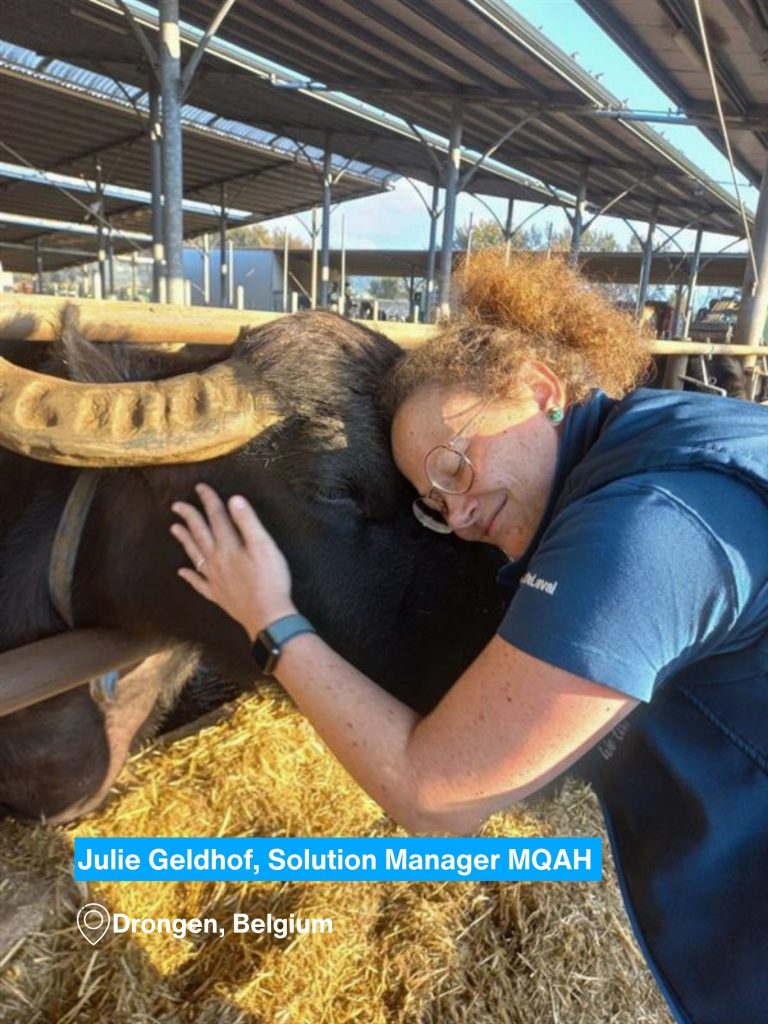
From a hospitality family to cows in the field
“I grew up in a hospitality family, far removed from agriculture,” Julie explains. “But from a very young age, I was fascinated by cows.”
That feeling has stayed with her ever since – the calmness of cows grazing in the field, their quiet presence. It was something she knew she wanted to be part of. “At a very young age, I already said I wanted to become a veterinarian. A dream I eventually made come true.”
During her veterinary studies, that fascination became more real. Fieldwork, internships on different farms, hands-on experience – it was where theory met real life. And where she discovered just how diverse the sector really is.
A job with impact (and a world of experiences)
Why dairy farming? For Julie, it’s about meaning. “I wanted a job with impact, and one that would allow me to explore different aspects of the sector.”
She found that combination at DeLaval. “My career at DeLaval has definitely made that possible. I’ve been able to visit farms all over the world and learn how differently dairy farming is organised globally.”
What surprised her most when she started? “The level of innovation and professionalism within the sector. Anyone who only has the traditional image of farming in mind is missing a big part of the reality: dairy farming today is high-tech, data-driven, and constantly evolving."
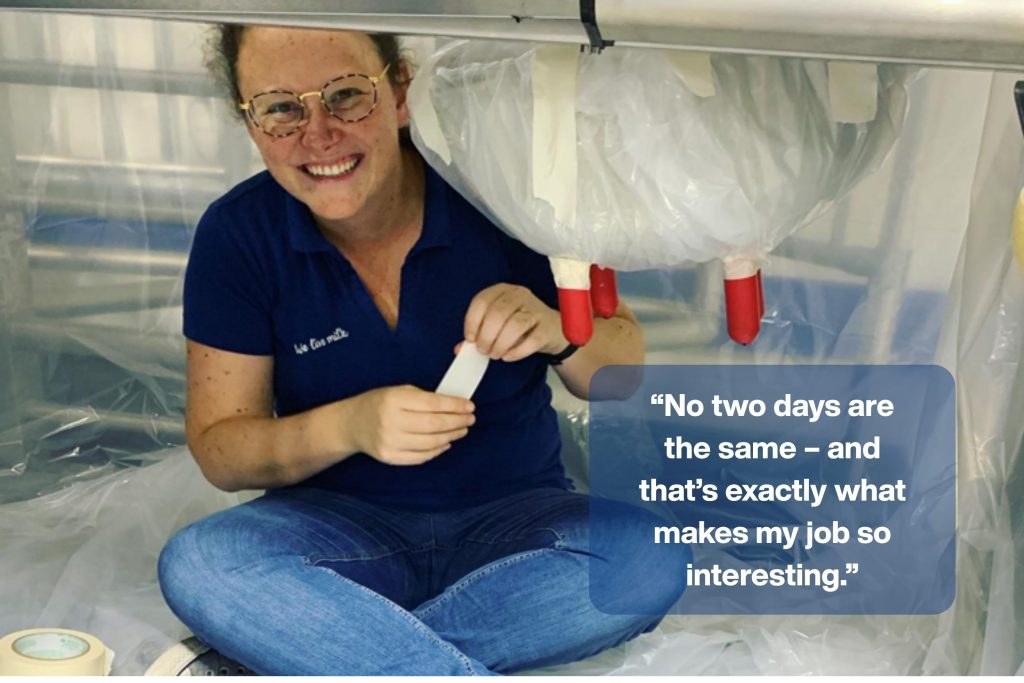
No two days the same
Julie’s working week doesn’t follow a set routine. “No day is the same,” she says. “As a Market Solution Manager MQAH, my role is very varied — and that’s exactly what makes it so interesting.”
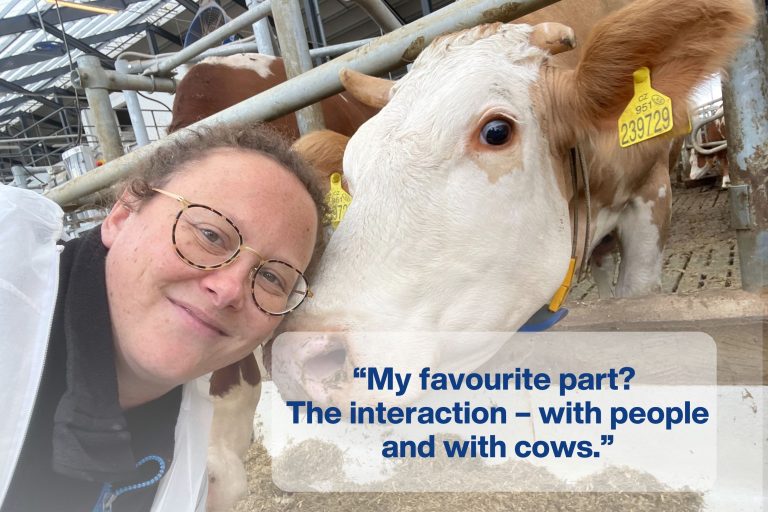
Still, there’s one common thread: connection. “My favourite part? The interaction with both people and cows.”
That combination defines her: strong in content, people-oriented, and firmly grounded in practice.
The invisible bond that changes everything
What Julie finds most rewarding about working in dairy farming is something people outside the sector don’t always see. Yes, it’s about production and profitability — but there’s more beneath the surface.
“What’s often less visible is the strong bond between a dairy farmer and their cows,” she explains. “That level of commitment creates an extra connection that I truly value.”
It’s exactly this human (and animal) element that makes the sector so unique: the daily care, attention to detail, and sense of responsibility that goes far beyond just ‘a job’.
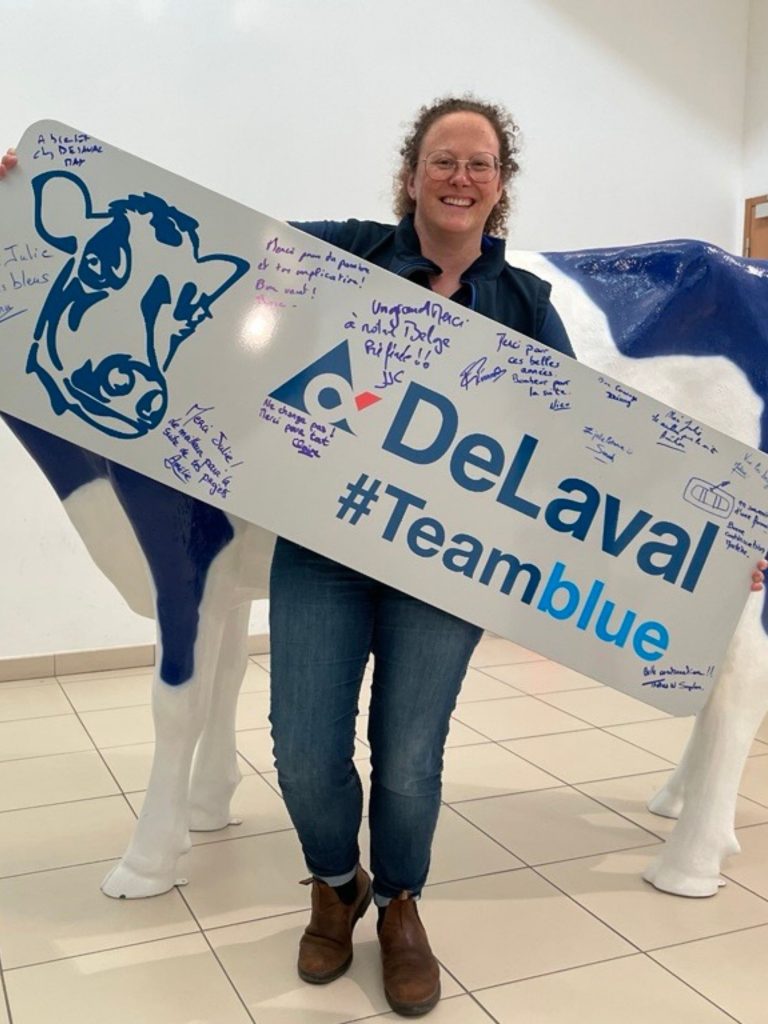
“Is that really a job for a woman?”
What does it mean for Julie to be a woman in this sector? “I’ve never really thought about it,” she says honestly. It only came up occasionally during her studies – in a way many women will recognise: a passing doubt. Is that really a job for a woman? people would ask. It only made her more determined. “It’s satisfying to prove the opposite.”
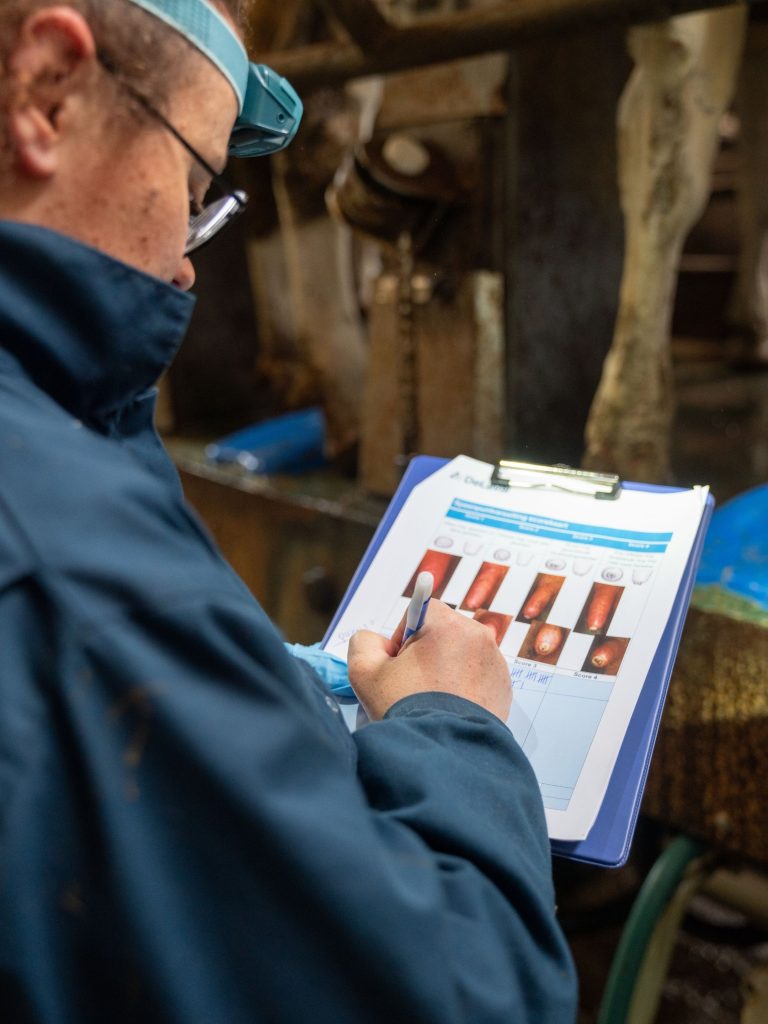
She carried that mindset into environments where she sometimes had to navigate different expectations. One example is her work in Saudi Arabia, where she delivered training on teat health at one of the world’s largest dairy farms. “There were some cultural differences to navigate,” she says, “but I was treated with respect and appreciated for my knowledge.”
She also believes the industry is gradually changing globally. “You can see that more and more women are becoming active within companies in this sector, and while there’s still sometimes an assumption that the man makes the decisions and the woman simply follows, in reality it’s often the woman who plays a decisive role in key decisions.”
Advice to young women: dare, trust, grow
If Julie could share one message with young women considering a future in agriculture, it would be this:“Dare to follow your passion — even if you don’t come from a farming background.”
According to her, the sector needs diverse profiles and perspectives. It’s exactly that mix of backgrounds that will make the future stronger.
And what would she tell her younger self? “Trust yourself and dare to take your place. You don’t need to know everything right away.”
A reassuring message — especially in a sector that can feel complex, technical, and sometimes intimidating.
The future: sustainability, animal welfare, and realis
Julie becomes enthusiastic when she looks ahead. She sees a clear direction: “An increasing focus on sustainability, animal welfare, and innovation.”
At the same time, she shares a wish many people in the sector recognise: “I hope that legislation and public opinion better reflect what is really happening on the ground.”
And for the role of women? She believes it will only grow: Women will become more visible and influential — not as an exception, but as a natural part of the sector.”
Switching off from work
Those who know Julie as a social and energetic colleague might find this surprising: “I’m very social and present, but I also really enjoy being alone and having quiet time.”
For the past year, sport has been an important outlet: running twice a week and swimming twice a week. “It helps me clear my head and stay mentally strong.”
And if you had to describe her in three words? Spontaneous. Enthusiastic. Passionate.
One small detail says a lot: her favourite moment of the day isn’t necessarily a meeting or a milestone — it’s “coffee breaks with colleagues”. Because that’s when conversations go beyond work. “Colleagues are often more than just colleagues. DeLaval feels like a big family.”