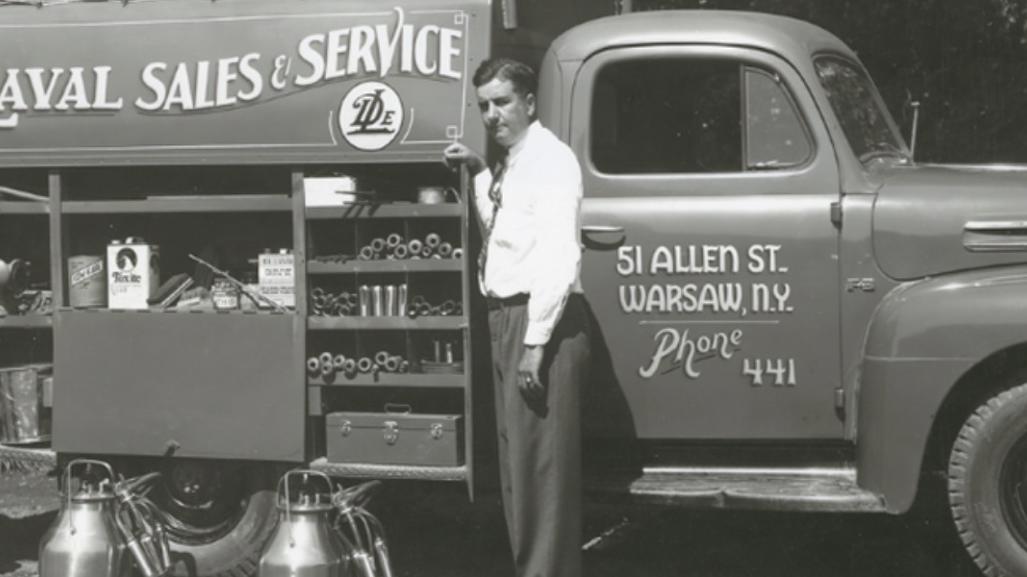
Our heritage
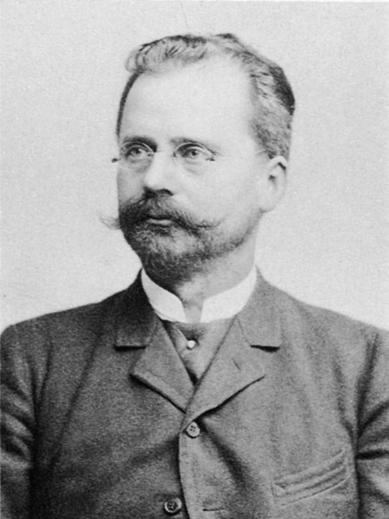
Where it all began – invention, patents, and early dairy technology
DeLaval’s origins are closely linked to Gustaf de Laval (1845–1913), a Swedish engineer and inventor whose work contributed significantly to the development of modern dairy farming.
In the late 1800s, separating cream from milk was slow, manual work. Milk had to stand for hours, increasing the risk of spoilage and limiting what farmers could produce.
In 1878, Gustaf de Laval introduced the centrifugal cream separator – a machine that dramatically improved the speed, cleanliness, and accuracy of cream separation. It quickly set a new global standard and established Gustaf de Laval as one of the leading engineers of his time. Over the course of his career, he secured 92 patents, reflecting a consistent focus on solving concrete problems through engineering.
To bring these innovations to farmers on a larger scale, he co-founded AB Separator with Oscar Lamm in 1883. The company expanded rapidly, driven by demand for the cream separator and a growing range of technologies that helped dairies modernise.
Innovation continued. In 1894, Gustaf de Laval patented one of the earliest milking machines – a key step towards mechanised milking and a foundation for the automated systems used on dairy farms today.
What began with a single breakthrough grew into a rapidly expanding industrial enterprise. AB Separator’s technologies spread far beyond Sweden, and its engineering-led approach became the basis of a legacy that continues to influence DeLaval today.
That same year, in 1894, Gustaf de Laval acquired Hamra Farm. The farm became a place where new ideas could be developed, tested, and refined under real farm conditions, closely linking engineering development to everyday dairy work.
More than a century later, Hamra Farm continues to serve this role – as a commercial dairy farm and a place for development, demonstration, and knowledge sharing.
Key milestones
1878
Introduction of the centrifugal cream separator
1883
AB Separator founded by Gustaf de Laval and Oscar Lamm
1888
De Laval Cream Separator Co. established in the United States
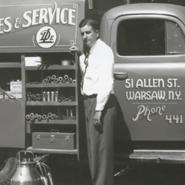
1894
Early milking machine patented
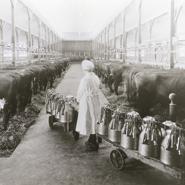
1894
Hamra Farm acquired
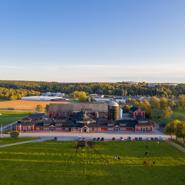
1918
First commercially practical milking machine introduced
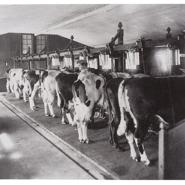
2000
DeLaval becomes a dedicated dairy company again
Going global
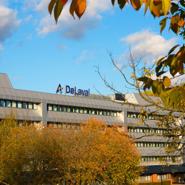
DeLaval’s international journey began early. In 1888, AB Separator established the DeLaval Cream Separator Co. in the United States, with operations in New York and Poughkeepsie. This marked the start of a global presence that soon extended across Europe, North America, and other regions.
As the 20th century began, the company continued refining and commercialising new technologies. In 1918, the first commercially practical milking machine was introduced, reinforcing DeLaval’s role in shaping dairy technology well beyond Gustaf de Laval’s lifetime.
This early international expansion helped ensure new dairy technologies reached farmers operating in different production environments and regions around the world.
A changing organisation, a sharper focus
As AB Separator’s technologies proved valuable beyond dairy farming, the company evolved into Alfa Laval. The new name reflected the AB disc separation technology and the expansion into wider industrial applications.
In 1991, Alfa Laval became part of the Tetra Laval Group, strengthening its global reach and technical capability. In 2000, the dairy and agricultural machinery business became a dedicated company once again, and the DeLaval name returned.
This change reaffirmed a clear focus: to develop technology for dairy farmers, and only dairy farmers, combining engineering expertise with experience gained from real-world use.
Innovation for modern dairy farms
In recent decades, DeLaval has continued to develop technologies that reflect changes in dairy farming and farm organisation.
A major milestone was the introduction of the DeLaval VMS™ (Voluntary Milking System), which allows cows to choose when to be milked and provides new ways to manage labour, monitor animals, and organise daily herd work.
Innovation has since expanded into automation, sensors, and digital services that support decision-making related to animal health, milk quality, labour efficiency, and long-term farm viability.
Looking ahead
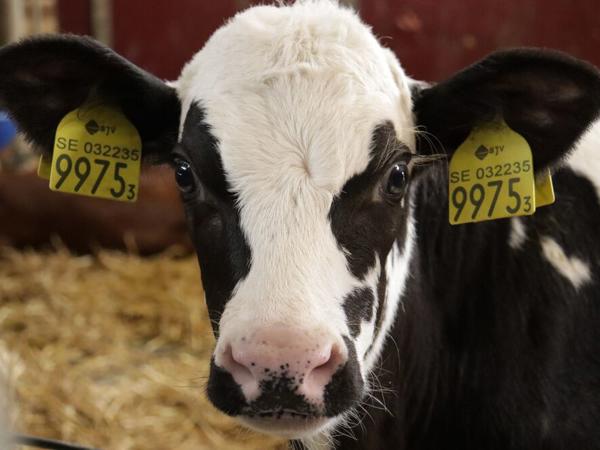
While much has changed since 1878, the underlying approach remains consistent: applying engineering to solve practical problems and designing solutions that work reliably in everyday farm use.
With deep roots in invention and applied engineering, DeLaval continues to build on its heritage – focused on supporting dairy farming and the generations of farmers who depend on it.