Swinging cow brushes: one brush, thousands of happy scratches
Supporting natural grooming behaviour and improving cow comfort every day
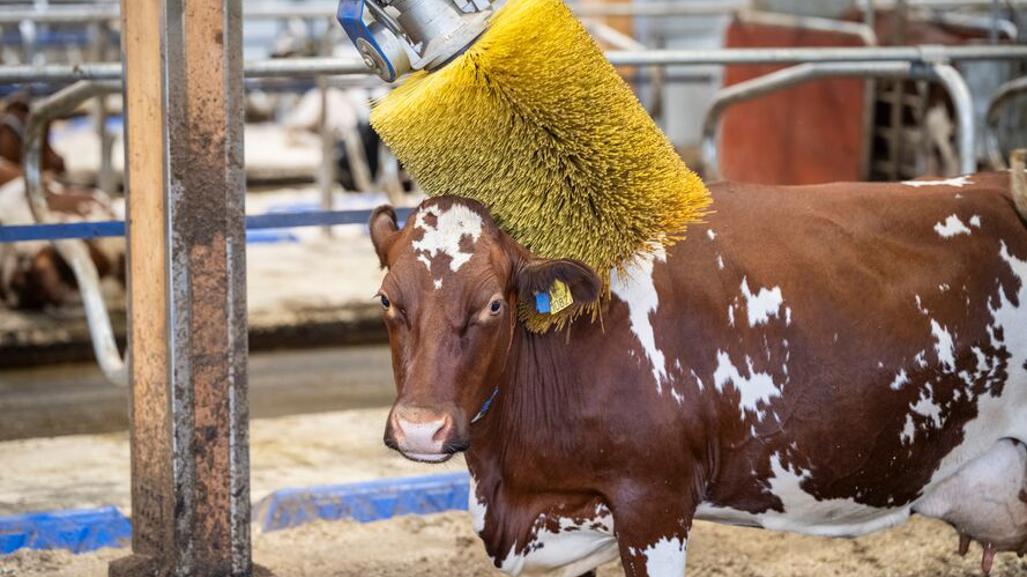
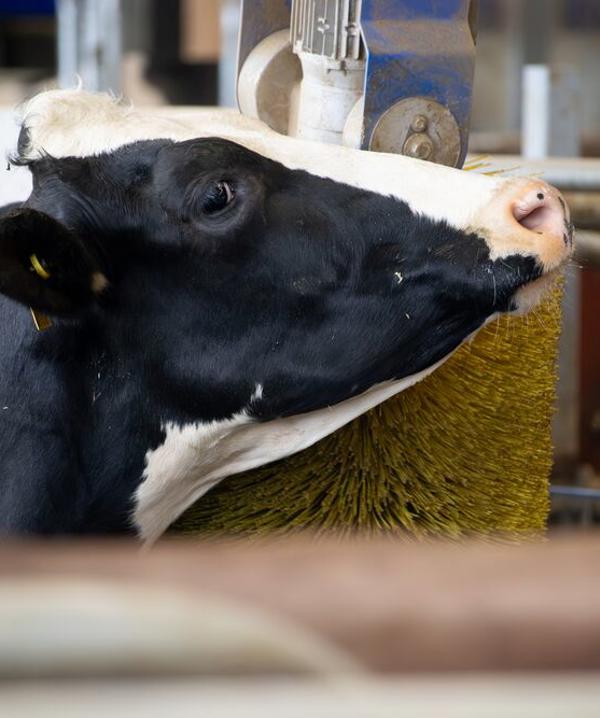
It doesn't take long in the VMS Barn at DeLaval's Hamra Farm in Tumba, Sweden, to find one of the most popular spots in the barn: the cow brushes. They attract a constant stream of visitors. Some cows stop by for a quick scratch, while others settle in for a lengthy grooming session, leaning into the brush as it moves along their body. However long they linger, one thing is clear: cows can't seem to get enough of a good brush.
That's why cow brushes were part of the barn's design from the very beginning. In this article, we'll explore why they matter, the benefits they offer, and the thinking behind a layout that makes them easy for cows to access and enjoy.
Why are cow brushes used?
For cows, a brush is so much more than a set of bristles. It's an important part of their daily routine, supporting natural grooming behaviour while helping them stay clean and comfortable.
Why? Because cows have a natural desire to groom themselves. In pasture-based systems, they often rub against trees, fence posts, and other surfaces. Inside a barn, a brush provides the same opportunity in a safe and controlled way.
It allows cows to groom their head, neck, back, and sides whenever they choose. As they use the brush, the bristles help remove loose hair, dirt, and dust, while the brushing action can stimulate circulation and gently clean the skin and coat. It also helps cows scratch those hard-to-reach itches. We like to think of it as a self-service spa for cows (we're a little jealous!).
And it's not just something they enjoy. Research¹ has shown that cows worked as hard to access a brush as they did to access to feed, underlining the important role grooming plays in their wellbeing. There is also evidence suggesting a link between brush access and milk production, with one scientific study² finding that cows with access to a DeLaval Swinging Cow Brush (SCB3) produced up to one litre more milk per cow per day.
Safe to say the trees are happy the cows now have a purpose-built alternative. 😉
How the brush moves
A cow brush might look simple, but there's some solid engineering behind it.
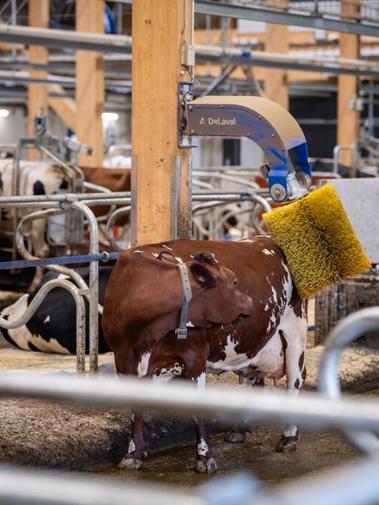
DeLaval offers several types of brushes for different animals and production systems, including solutions for calves, dairy cows, beef cattle, and goats. At Hamra Farm, we selected the DeLaval Swinging Cow Brush (SCB3), which is specifically designed for dairy cows.
The Swinging Cow Brush starts automatically when a cow leans into it and switches off once she's finished.
Thanks to its dual-pivot design, the brush can swing in multiple directions rather than just one. This allows it to move with the cow instead of staying fixed in place. As she leans against the brush, it can reach everything from the head and neck to the back and sides, while allowing her to apply the amount of pressure she prefers.
Another advantage is that the brush takes up relatively little space, making it easy to incorporate into different barn layouts.
The result is a brush that adapts to the cow, not the other way around.
Press play on the video to see the Swinging Cow Brush in action!
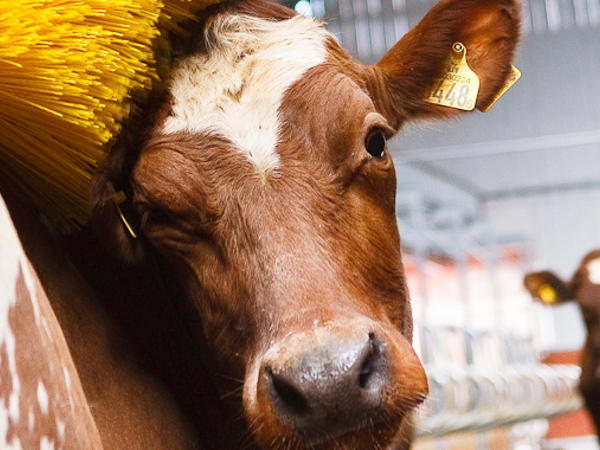
Cow brushes in the VMS Barn: Step inside and take a closer look
In this video, William Eriksson, Market Area Development Manager, takes us inside the VMS Barn to talk cow brushes.
Why brush placement matters
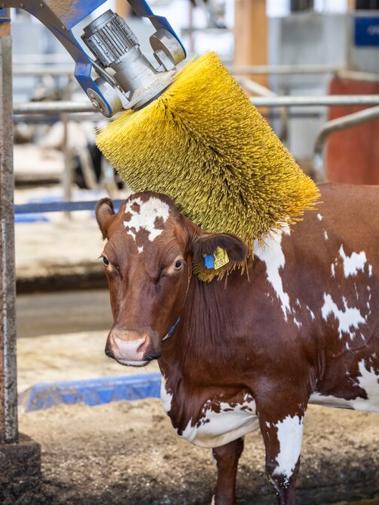
When planning the brush locations, we looked closely at how cows move through the barn and where they naturally spend their time. The brushes were placed along the routes cows regularly travel between the feeding area and the DeLaval VMS™ milking robots, making them easy to access as part of their normal daily routine while avoiding locations that could interfere with cow flow or create congestion.
We positioned the brushes along both the north and south feeding aisles, rather than in a single location, helping improve availability while reducing competition between cows.
To further support this, we've installed one brush for every 40 cows. The goal is to ensure there's usually a brush available when a cow wants to use one, without other cows having to wait too long for their turn.
For a deeper dive into the thinking behind the brush locations and overall barn design, watch this video (left).
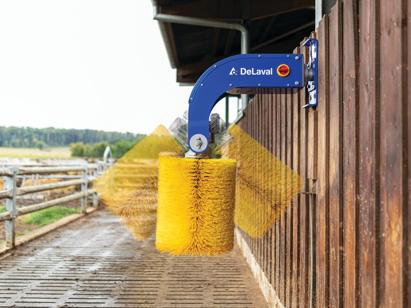
Hot tip: check the cylinder brush
Take a quick look at the brush every now and then. If the bristles are looking worn, flattened, or are no longer giving cows a good scratch, it's probably time to replace the cylinder.
A well-maintained brush keeps the unit working properly and ensures cows continue to get the grooming experience they're looking for.
Key takeaways
We hope we've shown that, for us, cow brushes are much more than a favourite hangout or a nice-to-have. They're an important part of supporting cow comfort, wellbeing, and the opportunity to express natural behaviours.
Here are some key takeaways:
• Cow brushes support natural grooming behaviour
They give cows the opportunity to scratch, groom themselves, and express a natural behaviour that is important to their wellbeing.
• Comfort is in the details
While often overlooked, cow brushes can play an important role in supporting comfort, cleanliness, and everyday welfare.
• Location matters
Placing brushes where cows naturally spend their time helps ensure they are easy to access throughout the day.
• Happy cows are more likely to perform at their best
Providing opportunities for cows to express natural behaviours is part of supporting their wellbeing. Comfortable, content cows are better positioned to stay healthy, productive, and perform at their best.
• Thoughtful barn design supports the whole cow experience
From ventilation and feeding systems to cow brushes, every element of the barn contributes to creating a comfortable environment for cows.