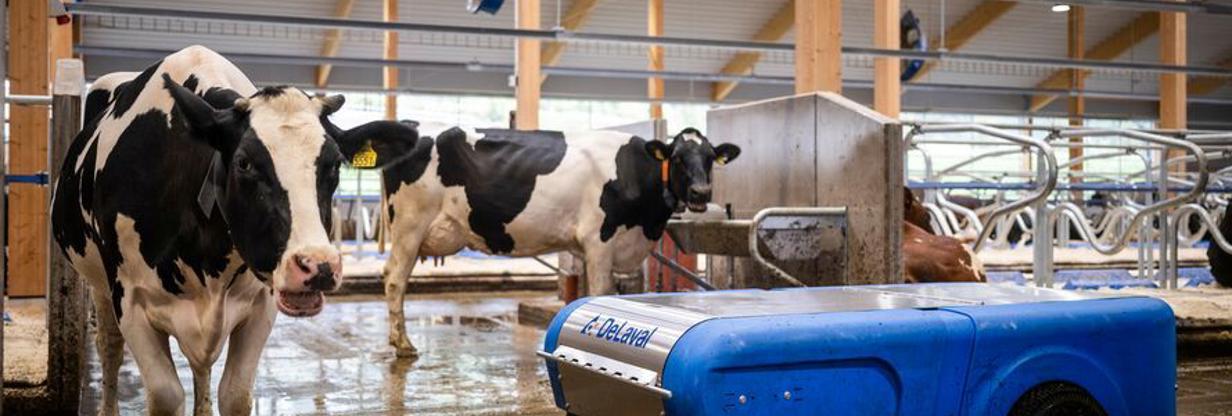
Planificación para mantener limpios los pasillos de Hamra Farm
Cómo los pasillos limpios favorecen el bienestar de las vacas, la eficiencia y la sostenibilidad en Hamra Farm
Puede que los pasillos limpios no sean lo primero en lo que se piensa al planificar un establo, pero su importancia se hace evidente rápidamente en el día a día. La limpieza de los pasillos desempeña un papel clave en el bienestar de las vacas y en la salud de sus pezuñas, al tiempo que influye en la carga de trabajo y en la facilidad con la que los animales se desplazan por el establo. Suelos resbaladizos, patas sucias o sistemas obstruidos evidencian rápidamente deficiencias en el diseño o en las rutinas de limpieza.
Durante el proyecto de ampliación de Hamra Farm, se priorizó la gestión del estiércol y la integración de robots de limpieza en el diseño de los nuevos establos, con el objetivo de garantizar pasillos limpios de forma constante. Un sistema de manejo del estiércol bien planificado, combinado con soluciones automatizadas, permitió mantener superficies de paso limpias y secas que favorecen el bienestar de las vacas y la salud de sus pezuñas.
Además, este enfoque contribuye a un funcionamiento diario más fiable y a una gestión más eficiente del establo. Al integrar ingeniería sólida, automatización y un circuito cerrado de estiércol, se demuestra cómo una planificación cuidada puede impulsar tanto el bienestar animal como el rendimiento global de la granja.
A continuación, desglosamos cómo se tomaron esas decisiones: qué se priorizó y por qué es importante para el funcionamiento diario del establo.
Limpieza de los pasillos en el establo VMS
En el vídeo, William Eriksson, Market Area Development, Eastern Europe, DeLaval, nos muestra el establo VMS de Hamra Farm y explica cómo se planifica y gestiona la limpieza de los pasillos para mantener las superficies de tránsito limpias, secas y seguras para las vacas.
Por qué la limpieza de los pasillos es importante para la salud, el comportamiento y la productividad de las vacas
Para las vacas, el estado de la superficie por la que caminan desempeña un papel fundamental en su salud, comportamiento y productividad
Riesgo de lesiones
Los suelos mojados o contaminados aumentan el riesgo de resbalones y ejercen una presión adicional sobre las pezuñas y las articulaciones, lo que con el tiempo eleva el riesgo de cojera y lesiones en las pezuñas. Las vacas pueden mostrarse indecisas, acortar la zancada o evitar por completo ciertas zonas, lo que altera el flujo de las vacas.
Cambios de comportamiento
Cuando caminar resulta incómodo, las vacas tienden a permanecer de pie durante más tiempo, a retrasar sus visitas al comedero o al bebedero, o a mostrarse menos dispuestas a desplazarse hasta los robots de ordeño. En los establos automatizados, esto puede provocar una disminución de las visitas voluntarias al robot, aumentando la necesidad de intervenir y de ir a buscar a los animales.
Higiene de las pezuñas y la ubre
Los pasillos limpios reducen el contacto prolongado entre las pezuñas y el estiércol, lo que favorece la higiene de las pezuñas y disminuye el riesgo de infección. Las zonas de paso más limpias también mejoran la limpieza de las ubres y los pezones, lo cual es especialmente importante en los establos con sistema VMS.
Productividad
Los pasillos limpios y secos facilitan el desplazamiento fluido entre las zonas de descanso, el pienso, el agua y los robots de ordeño. Esto ayuda a las vacas a mantener patrones regulares de alimentación y ordeño, favorece una producción de leche constante y reduce la intervención manual en los establos automatizados.
Limpieza de los pasillos con robots de limpieza en el establo VMS de Hamra Farm
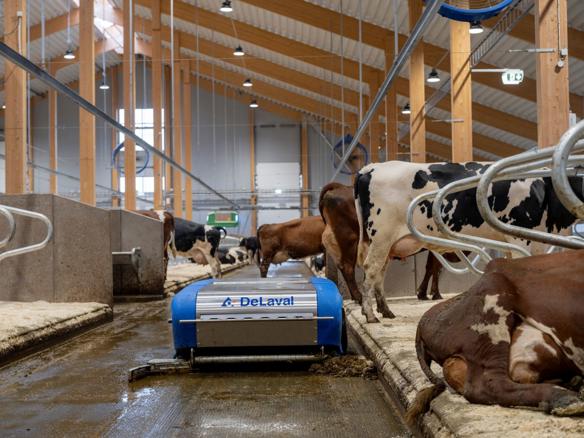
En el establo VMS de Hamra Farm, la gestión del estiércol se realiza mediante robots collector de DeLaval, seleccionados específicamente para cumplir con las exigencias de un sistema de ordeño automatizado. A diferencia de los sistemas tradicionales, que empujan el estiércol a lo largo de los pasillos, estos robots lo recogen directamente de la superficie de tránsito y lo transportan fuera del establo, reduciendo así el contacto con las pezuñas y mejorando la higiene general.
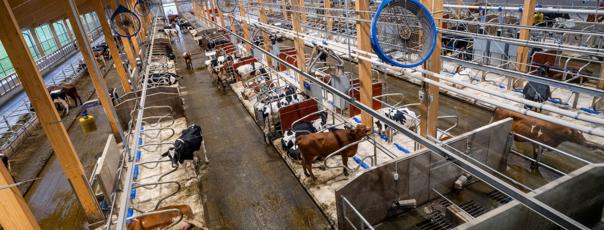
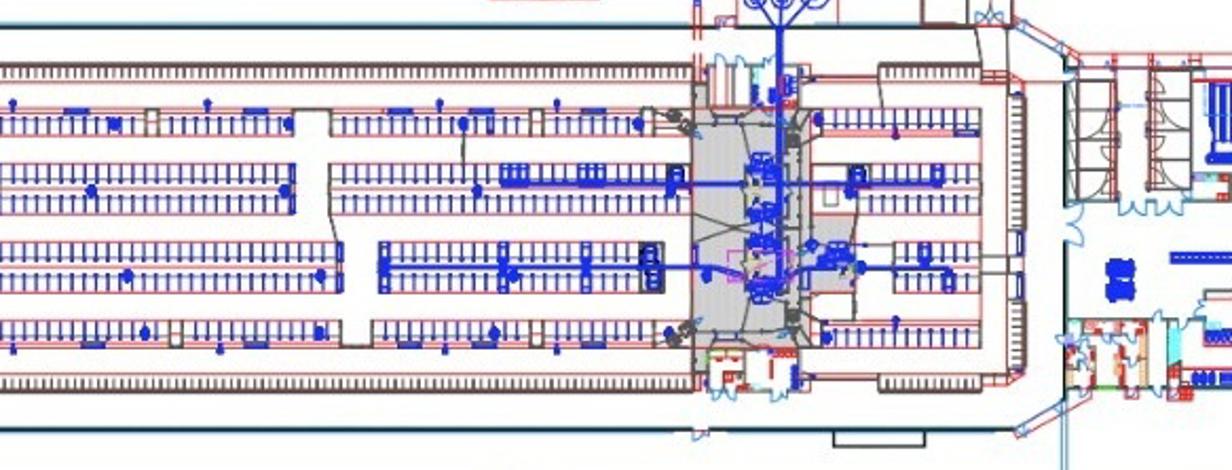
El establo cuenta con cuatro robots de limpieza DeLaval: tres operando en la zona principal de las vacas y uno en la zona VIP. Cada robot tiene asignada un área específica y sigue una ruta de limpieza predefinida, lo que garantiza un funcionamiento estructurado y una retirada constante y fiable del estiércol en todo el establo. El sistema de gestión del estiércol ha sido diseñado para operar de forma eficaz a plena capacidad —hasta 350 vacas—, asegurando un rendimiento estable incluso a medida que aumenta el número de animales.
Este tipo de configuración cobra especial importancia en establos con ordeño automatizado, donde las condiciones de los pasillos influyen directamente en el comportamiento y el flujo de las vacas. Para que el sistema funcione correctamente, las vacas deben sentirse seguras al desplazarse hacia y desde los robots de ordeño durante todo el día.
Superficies resbaladizas o sucias pueden reducir las visitas voluntarias al robot, incrementando la necesidad de intervención manual y afectando tanto a la eficiencia del trabajo como al rendimiento del sistema. Por el contrario, una limpieza constante de los pasillos favorece un tráfico fluido de las vacas y contribuye a que el sistema de ordeño funcione de forma óptima.
Estaciones de estacionamiento y recarga
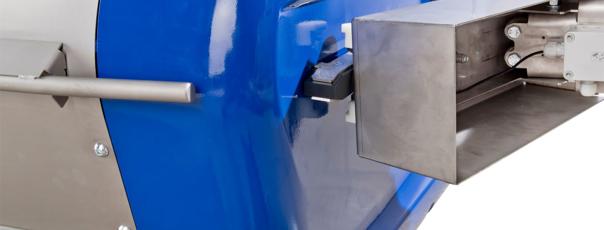
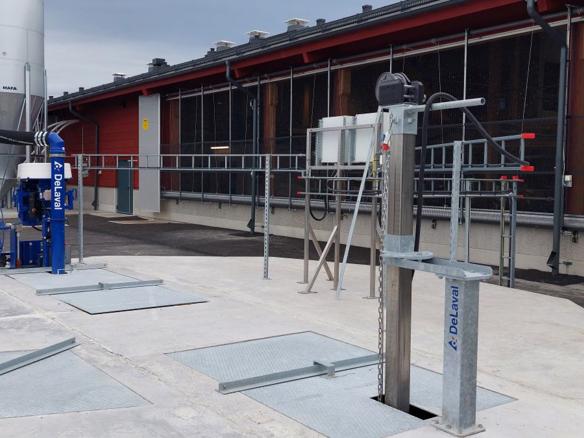
Cada robot dispone de su propia estación de estacionamiento y recarga. Durante este proceso, los robots vacían automáticamente el estiércol recogido en una tubería de desagüe que conduce al foso de recepción del establo VMS, el cual recoge exclusivamente el estiércol procedente de este establo.
Los demás establos - el de novillas (ganado joven) y el de vacas secas/maternidad - cuentan cada uno con sus propias fosas independientes. En total, la granja dispone de tres fosas, una por cada establo.
Todas las fosas están equipadas con bombas de estiércol que transportan el purín hasta la laguna de almacenamiento, completando así el sistema de gestión de estiércol de la granja.
Fosas de recepción
Durante la recarga, los robots vacían automáticamente el estiércol recogido en una tubería de drenaje que conduce a la fosa de recepción del establo VMS, la cual recibe estiércol exclusivamente del establo VMS.
En total, la granja cuenta con tres fosas de recepción. El establo de novillas (ganado joven) tiene su propia fosa de recepción, mientras que el establo de vacas secas de Elly y el establo de maternidad y terneros comparten una fosa de recepción. Todas las fosas de recepción están equipadas con bombas de estiércol que transfieren el estiércol a la laguna.
Diseñado para una limpieza frecuente y constante
Nuestra configuración permite limpiar los pasillos de forma continua a lo largo del día, incluidas las zonas de mayor tránsito, como los cruces.
En el establo VMS, el manejo del estiércol está diseñado para retirarlo con frecuencia en las diferentes zonas del establo, normalmente cada dos horas, en lugar de permitir que se acumule antes de su retirada. Esto ayuda a evitar que el estiércol se seque, se compacte o se extienda por el establo, especialmente en las zonas donde las vacas se mueven y se agrupan más.
En la práctica, hemos comprobado que este enfoque favorece:
- Superficies de paso más limpias y secas, lo que ayuda a las vacas a moverse con mayor seguridad y comodidad por todo el establo.
- Una mayor limpieza de las pezuñas y las patas, lo que reduce el contacto prolongado con el estiércol y favorece la salud de las pezuñas.
- Un flujo más fluido de las vacas, especialmente alrededor de las entradas de los robots y otras zonas de mucho tránsito.
- Rutinas de alimentación y ordeño más consistentes, ya que las vacas se desplazan con mayor facilidad entre las zonas de descanso, alimentación, agua y los robots de ordeño.
- Menor necesidad de intervención manual, ya que se reduce la frecuencia con la que es necesario ir a buscar a las vacas, mejorando la eficiencia del trabajo diario en establos automatizados.
- Mayor facilidad para la observación, permitiendo detectar con más rapidez cambios en el movimiento y la marcha, así como signos tempranos de incomodidad o problemas de movilidad.
- Condiciones más estables durante todo el año, incluso ante variaciones en los volúmenes de estiércol y en los niveles de humedad.
En conjunto, el resultado son pasillos más limpios, un movimiento más calmado de las vacas y un entorno de establo que favorece el bienestar animal, la productividad y una gestión diaria más eficiente.
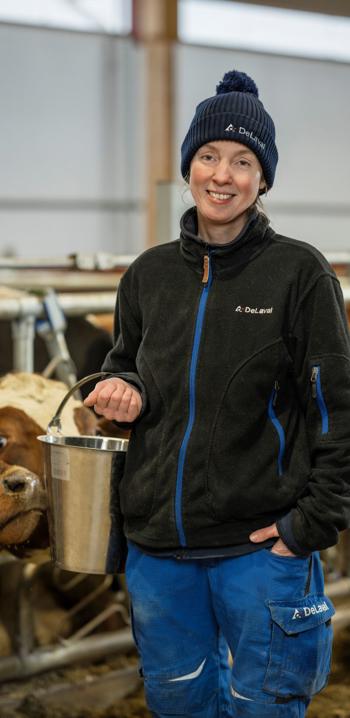
El diseño de los pasillos favorece el buen cuidado de las pezuñas. Dado que el robot de limpieza recoge el estiércol en lugar de empujarlo, las vacas tienen las pezuñas y las patas más limpias, lo que beneficia tanto a la salud de las pezuñas como a la de las ubres. El robot se desplaza lentamente y las vacas pueden adelantarlo con facilidad, lo que contribuye a crear un ambiente tranquilo. Las cubiertas de goma instaladas en la mayoría de los pasillos también favorecen el buen cuidado de las pezuñas, proporcionan un agarre seguro y favorecen el comportamiento natural de las vacas.
Linda Thulin
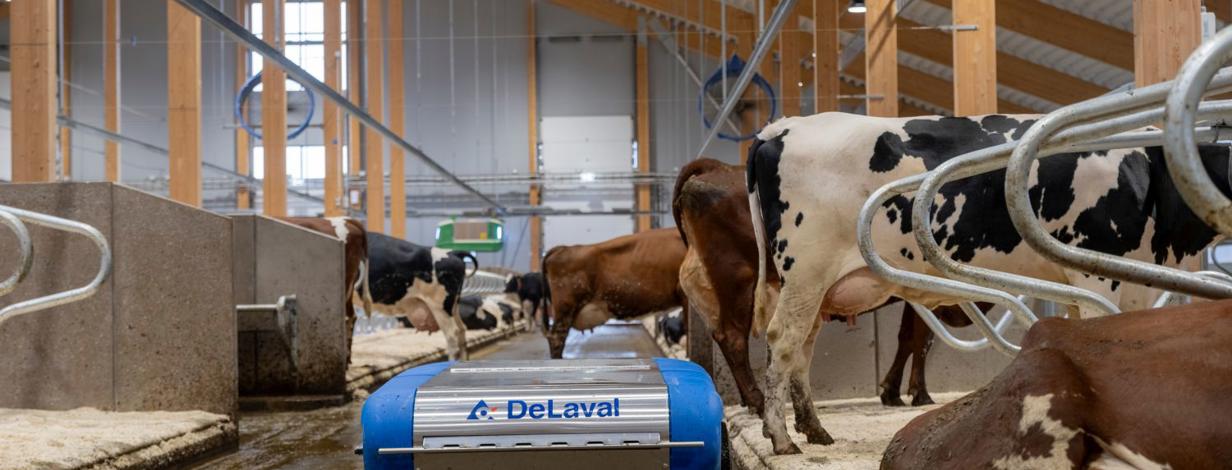
La gestión del estiércol también va de la mano del diseño del suelo.
Superficies de paso cómodas que favorecen el comportamiento natural
En el establo VMS, todos los pasillos, excepto las zonas de alimentación, están equipados con cubiertas de goma de 18 mm, lo que proporciona una superficie cómoda y antideslizante que favorece el movimiento natural y reduce la tensión en las articulaciones y las pezuñas. Los pasillos de alimentación se han dejado deliberadamente sin cubiertas de goma para favorecer el desgaste natural de las pezuñas, complementado con un recorte periódico de las mismas como parte del manejo rutinario del rebaño.
En conjunto, la elección del suelo y la retirada eficaz del estiércol contribuyen al bienestar de los animales, a que las vacas se desplacen con confianza y a una gestión fluida del rebaño en el día a día del sistema de ordeño automatizado.
Un sistema de residuos cerrado para reducir las emisiones
Desde el momento en que se recoge el estiércol, el sistema de residuos de Hamra Farm funciona como un circuito cerrado. Tanto los fosos de recepción como la laguna están cubiertos, lo que limita el contacto entre el estiércol y el aire y ayuda a reducir las emisiones de amoníaco, los olores y las pérdidas de nutrientes. Al mantener el estiércol encerrado, se reducen las emisiones, se mantienen bajos los niveles de olor y se conservan nutrientes valiosos.
Desde el foso de recepción, el estiércol se bombea a la laguna a través de un sistema de tuberías de gran diámetro. Una agitación exhaustiva garantiza una consistencia homogénea, lo que mejora la eficiencia del bombeo y reduce el riesgo de atascos. Es esencial que el funcionamiento sea fiable en esta fase, ya que las interrupciones afectan rápidamente a toda la cadena de gestión del estiércol.
Así es como se gestiona la limpieza de los pasillos en Hamra Farm.
En este vídeo, Gökhan Kaplan, DeLaval solution specialist for barn and manure systems, explica cómo el sistema de gestión de estiércol mantiene limpios los pasillos.
Gestión duradera del estiércol en el establo de ganado joven
Mientras que en el establo VMS se utilizan robots de limpieza, la limpieza de los pasillos en el establo de ganado joven se lleva a cabo mediante arrobaderas convencionales con un sistema de cadena de alta resistencia.
Esta solución se ha seleccionado para adaptarse al diseño del establo, al flujo de vacas y a las rutinas de gestión del establo de ganado joven. El movimiento de las vacas es más predecible, las distribuciones son más sencillas y no se requiere un acceso continuo a los robots de ordeño. En este contexto, un sistema de arrobaderas robusto proporciona una forma eficaz, duradera y de bajo mantenimiento de mantener limpios los pasillos.
La configuración de las arrobaderas difiere de la solución con robots de estiércol del establo VMS, donde se necesita una limpieza flexible, frecuente y específica en las zonas de mucho tránsito alrededor de los robots y los cruces. El uso de diferentes sistemas en distintas zonas del establo permite adaptar la gestión del estiércol a las necesidades específicas, sin dejar de formar parte de un concepto global integrado.
Una granja, diferentes soluciones: un concepto global
No existe una única solución óptima para la limpieza de los pasillos. Los sistemas de lavado, las arrobaderas y los robots de limpieza desempeñan cada uno su función, dependiendo del diseño del establo, las camas, la disponibilidad de mano de obra y las prioridades de gestión.
En Hamra Farm, la gestión del estiércol refleja esas diferencias:
- Robots de estiércol en el establo VMS.
- Arrobaderas convencionales en el establo de ganado joven.
- Un sistema cerrado de residuos que favorece el almacenamiento.
Mantener limpios los pasillos no es solo una cuestión de higiene. Es la base para el bienestar de las vacas, unas rutinas diarias fiables y un rendimiento sostenible de la granja, tanto hoy como a largo plazo.
Opciones para la limpieza de pasillos en las granjas
¿Qué sistemas de limpieza de pasillos se utilizan habitualmente en las granjas?
Se emplean varios sistemas para mantener limpios los pasillos, dependiendo del diseño de la granja, el clima y las preferencias de gestión.
¿Qué son las arrobaderas mecánicas tradicionales para pasillos?
Los sistemas mecánicos tradicionales, como las arrobaderas hidráulicas, de cadena o metálicas, arrastran el estiércol a lo largo del pasillo hasta un canal transversal a intervalos fijos. Estos sistemas son robustos y se utilizan ampliamente, especialmente en climas más fríos, pero suelen limpiar a horas fijas en lugar de hacerlo de forma continua.
¿Qué es el lavado de pasillos con agua?
Los sistemas de lavado con agua utilizan grandes volúmenes de agua que se liberan a intervalos para desplazar el estiércol a través de canales hacia sistemas de recogida o separación. Aunque son eficaces en climas moderados, el lavado depende de una disponibilidad de agua y de una capacidad de drenaje suficiente.
¿Qué son los robots de limpieza?
Los robots de limpieza de estiércol son unidades autónomas que limpian los pasillos repetidamente a lo largo del día. Permiten una frecuencia de limpieza flexible y un funcionamiento específico, lo que ayuda a mantener superficies de paso más limpias y secas sin molestar a las vacas.
¿Por qué no se utiliza el lavado de pasillos con agua en Hamra Farm?
¿Por qué Hamra Farm ha decidido no utilizar el lavado de pasillos con agua?
En Hamra Farm no se utilizan sistemas de lavado con agua debido a las condiciones climáticas, a consideraciones de sostenibilidad y a la legislación local.
¿Cómo influye el clima en esta decisión?
En inviernos largos y fríos, los sistemas de lavado corren el riesgo de congelarse en los pasillos, canales y tuberías.
¿Qué ocurre con el consumo de agua y la gestión del estiércol?
Los sistemas de lavado requieren grandes volúmenes de agua y una capacidad de almacenamiento suficiente. En Hamra Farm, la gestión del estiércol está diseñada como un sistema mecánico cerrado para minimizar el consumo de agua, facilitar la gestión controlada de los nutrientes y reducir las emisiones del estiércol expuesto.
Puntos clave
A continuación, se presentan algunos de los puntos clave sobre cómo se ha planificado y gestionado la limpieza de los pasillos en Hamra Farm:
- La limpieza de los pasillos es fundamental para el bienestar de las vacas: las superficies de paso secas y antideslizantes favorecen un desplazamiento seguro, reducen la tensión en las pezuñas y las articulaciones, y ayudan a mantener el comportamiento natural de las vacas.
- Una limpieza frecuente y constante es más importante que una limpieza ocasional: la retirada regular del estiércol evita su acumulación, reduce el riesgo de resbalones y mantiene el buen funcionamiento de las zonas de mucho tránsito.
- La elección del sistema de gestión del estiércol debe ajustarse a la función del establo: los robot collectors permiten una limpieza flexible y específica en los establos de ordeño automatizado, mientras que las arrobaderas robustas son muy adecuadas para las zonas de ganado joven.
- El suelo y el manejo del estiércol funcionan en conjunto: las cubiertas en los pasillos, combinadas con una retirada eficaz del estiércol, favorecen la salud de las pezuñas, el agarre y el movimiento natural, mientras que los pasillos de alimentación sin cubiertas promueven el desgaste natural de las pezuñas.
- Los pasillos limpios favorecen el rendimiento del sistema, no solo la higiene: unas buenas condiciones en los pasillos hacen que las vacas estén dispuestas a desplazarse hacia los robots de alimentación, agua y ordeño, lo que reduce la necesidad de ir a buscarlas y la intervención manual.
- Los sistemas cerrados de gestión de efluentes contribuyen a los objetivos de sostenibilidad: la gestión cerrada del estiércol ayuda a reducir las emisiones, los olores y las pérdidas de nutrientes, al tiempo que garantiza un funcionamiento fiable a largo plazo.
Próximamente en nuestra serie de blogs: un análisis en profundidad del cepillo rotativo para vacas (SCB) de DeLaval y cómo los cuidados de las vacas favorecen la comodidad, el comportamiento y el bienestar en Hamra Farm.
No te lo pierdas.