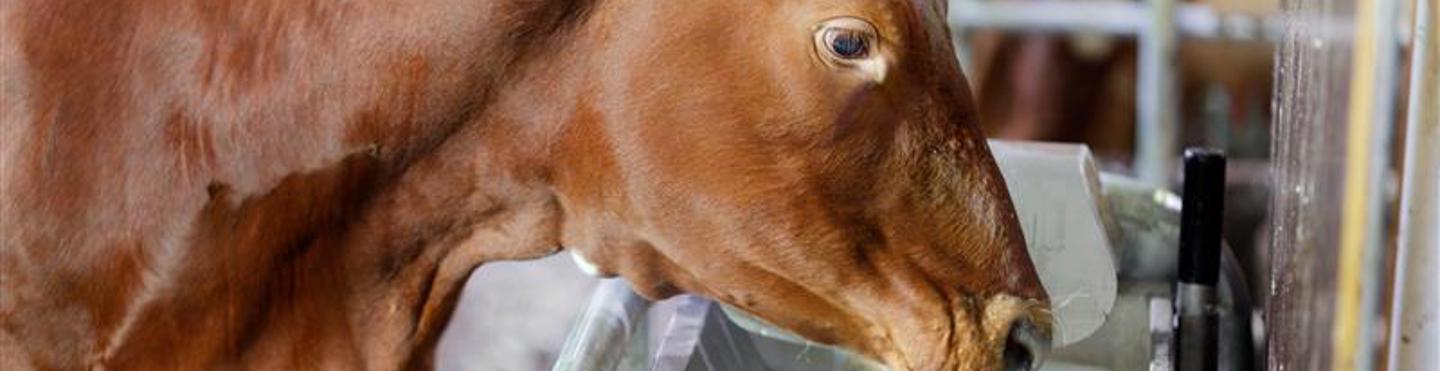
Hamra Farm: cómo garantizar un buen acceso al agua en el establo
Cómo aprovechamos cada gota de agua
A menudo se dice que el agua es el pienso más barato del establo. En una granja, también es uno de los más importantes. La producción de leche exige un gran consumo de agua, lo que significa que las vacas de ordeño necesitan mucha más agua que el ganado de carne para mantener la ingesta de pienso y la producción diaria de leche.
Sin un acceso rápido, fácil y fiable a agua potable limpia, las vacas no consumirán la cantidad necesaria. Cuando disminuye la ingesta de agua, el consumo de alimento y la producción de leche se ven rápidamente afectados. Por ello, el acceso al agua —así como el diseño del sistema de distribución— debe integrarse desde el primer momento, en lugar de considerarse como un elemento secundario o añadido posteriormente.
En Hamra Farm, este principio ha guiado el reciente proyecto de ampliación. El agua se consideró un elemento fundamental en el diseño del establo, con un objetivo claro: facilitar que las vacas puedan beber siempre que lo necesiten, sin competencia ni estrés.
Esto implicó planificar el sistema de agua de forma integral, teniendo en cuenta aspectos como la capacidad y la ubicación de los abrevaderos, el caudal total disponible, el flujo de tráfico de las vacas y soluciones específicas adaptadas a las condiciones de frío invernal. El resultado es un sistema diseñado para favorecer el comportamiento natural de ingesta de agua a lo largo del día, lo que contribuye a mantener tanto el consumo de pienso como la producción de leche.
A continuación, compartimos cómo se planificó el acceso al agua en Hamra Farm, centrándonos en el establo VMS, junto con recomendaciones prácticas para quienes estén planificando o renovando un establo lechero.
Un recorrido por el establo VMS
Hablar del agua es una cosa. Ver cómo la utilizan realmente las vacas es otra muy distinta. William Eriksson, Market Area Development, Eastern Europe, DeLaval, nos lleva al interior del establo VMS para mostrarnos cómo las vacas acceden al agua y la utilizan en su día a día.
Por qué la ubicación del agua es importante para el flujo de las vacas, su consumo y la producción de leche
En lo que respecta al agua, la mera disponibilidad no es suficiente: la ubicación es clave. Las vacas lecheras beben con frecuencia y en pequeñas cantidades, especialmente en torno a los momentos de alimentación y ordeño. Por ello, los puntos de acceso al agua deben situarse de forma que se integren de manera natural en sus rutinas diarias de alimentación, bebida y desplazamiento dentro del establo, en lugar de convertir el acto de beber en una actividad aislada o secundaria.
Las vacas no hacen cola, no se abren paso entre otras ni recorren distancias innecesarias solo para beber. Cuando los puntos de agua están demasiado alejados o situados en zonas concurridas e incómodas, simplemente reducen su consumo. Y eso supone un problema: cuando las vacas beben menos, también ingieren menos alimento, la digestión se resiente y, como consecuencia, la producción de leche suele disminuir.
Para evitarlo, era fundamental planificar el acceso al agua como parte del flujo natural del movimiento diario de las vacas, no como puntos de bebida aislados. Tanto la ubicación como la capacidad de los bebederos se diseñaron teniendo en cuenta el tránsito de los animales, las zonas de alimentación y las áreas de descanso, prestando además especial atención a la fiabilidad del sistema durante todo el año. En climas fríos, esto implica ir un paso más allá: el acceso al agua debe seguir siendo atractivo y funcional también en invierno, no solo en condiciones climáticas templadas.
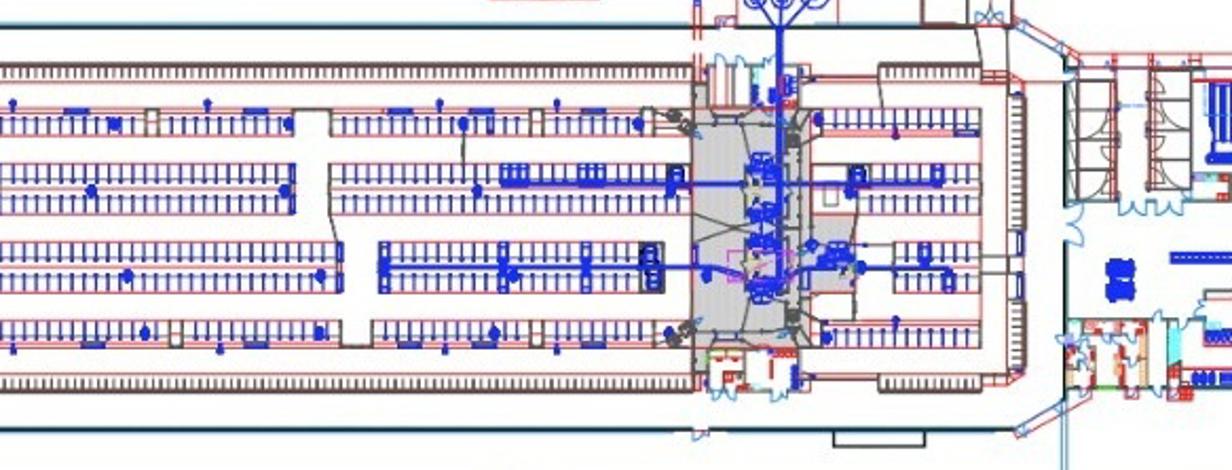
Ubicación de los bebederos y flujo de las vacas en nuestro establo VMS
En el establo VMS de Hamra Farm, los bebederos están situados en cada pasillo transversal y a lo largo del pasillo de alimentación. Cuando los puntos de agua se colocan a lo largo de los recorridos que ya utilizan las vacas, la ingesta de agua se convierte en parte de su movimiento diario. Esto proporciona un fácil acceso al agua sin desvíos ni retrasos, lo que fomenta una ingesta regular a lo largo del día y ayuda a mantener una digestión y una producción estables.
Esto también mantiene un flujo fluido de las vacas y favorece visitas constantes y voluntarias a los robots DeLaval VMS™, sin crear una presión innecesaria en la zona de ordeño.
Al ubicar los bebederos principalmente en pasillos transversales amplios, en lugar de directamente en los pasillos principales, se permite que las vacas permanezcan de pie y beban cómodamente mientras otras pueden circular libremente por detrás.
Una regla práctica es que una vaca adulta debe poder beber sin sentirse presionada, disponiendo de espacio suficiente para que al menos otras dos vacas puedan pasar detrás de ella en ambas direcciones. Este aspecto es especialmente relevante en zonas de alto tránsito. Facilitar que las vacas beban sin ser molestadas reduce la competencia y la presión social dentro del grupo, lo que contribuye a un comportamiento más tranquilo y equilibrado en el rebaño.
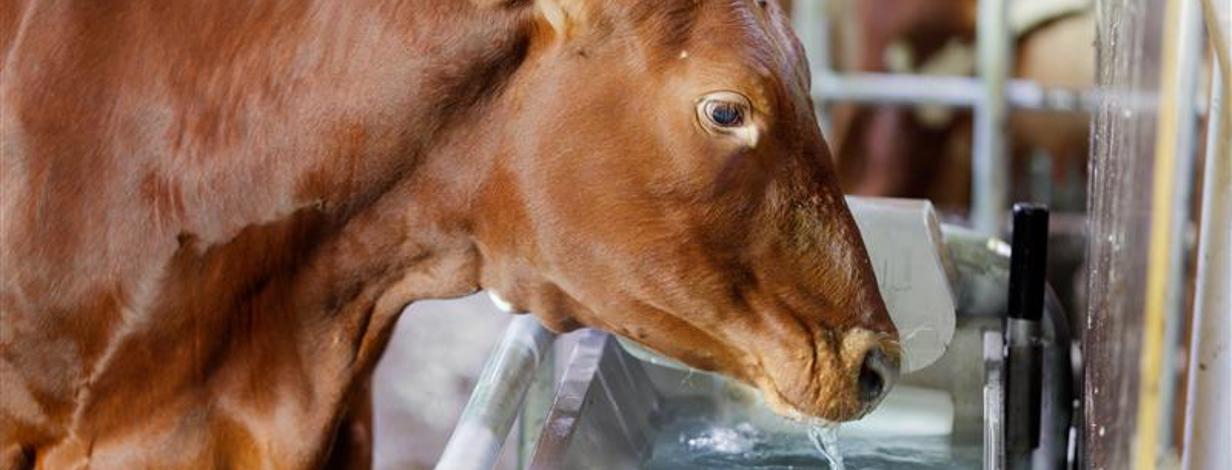
Diseño de la capacidad en momentos de alta demanda: espacio de bebedero por vaca
Una buena ubicación por sí sola no es suficiente si muchas vacas necesitan beber al mismo tiempo. Por ello, la capacidad es un factor clave dentro del diseño global del sistema de abastecimiento de agua.
En Hamra Farm, se siguió la recomendación de DeLaval de disponer de un mínimo de 10 centímetros de bebedero por vaca. Con un rebaño de aproximadamente 350 vacas, esto supone una longitud total de bebederos de al menos 35 metros. Esta base permite que el sistema responda adecuadamente a los picos de consumo, como los que se producen inmediatamente después del ordeño o durante períodos de altas temperaturas.
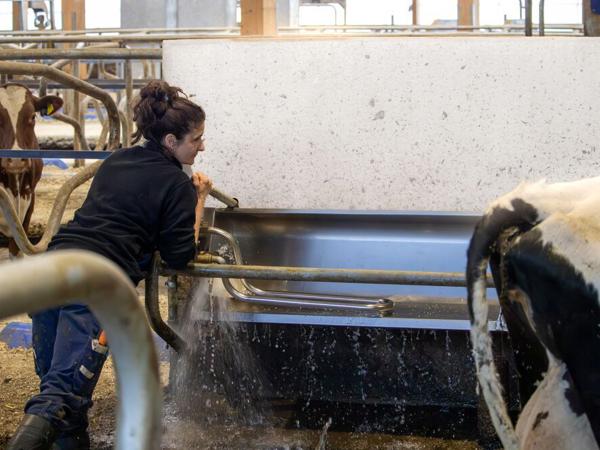
Bebederos de acero inoxidable y caudal de alta capacidad
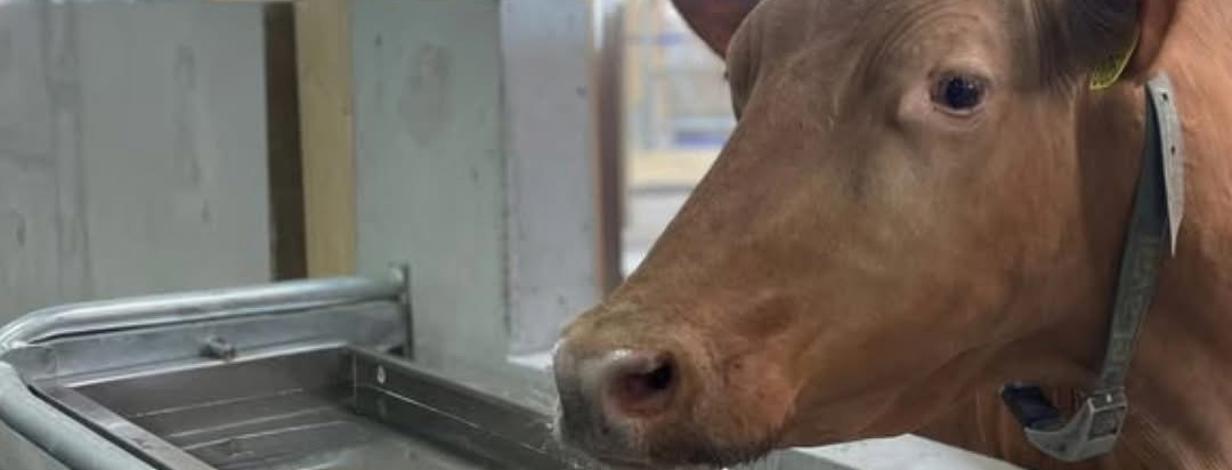
No solo son importantes el tamaño y la ubicación de los bebederos: la limpieza también desempeña un papel fundamental. El acceso a agua limpia es esencial, ya que las vacas son muy sensibles al sabor y al olor, y pequeñas variaciones en la calidad pueden reducir su consumo.
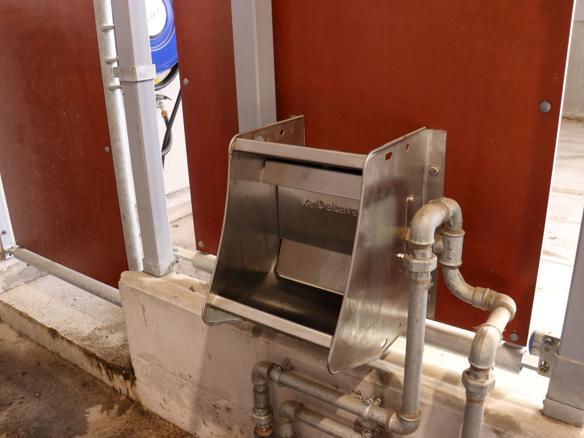
Por este motivo, se optó por bebederos de acero inoxidable, que destacan por su durabilidad, su superficie higiénica y su facilidad de mantenimiento. Para facilitar la limpieza diaria, el personal lleva habitualmente un cepillo DeLaval Dirtbrush, lo que permite limpiar rápidamente los bebederos durante las rutinas diarias. Además, estos están diseñados para poder inclinarse, lo que agiliza y mejora la eficacia de la limpieza, ayudando a mantener una calidad de agua constante en el tiempo.
Tan importante como la limpieza es garantizar un llenado rápido, especialmente durante los momentos de mayor demanda, para evitar que las vacas tengan que esperar. Las válvulas de alta capacidad suministran hasta 32 litros por minuto, asegurando un flujo continuo de agua. De este modo, incluso cuando varias vacas beben simultáneamente, el caudal se mantiene estable, evitando interrupciones y garantizando que el consumo de agua no se vea limitado.
Un sistema de agua diseñado para climas fríos
Dado que nos encontramos en Suecia, fue necesario tener en cuenta las condiciones estacionales desde el principio a la hora de diseñar el sistema de agua del establo. Los inviernos fríos causan problemas si los sistemas de agua no están diseñados para seguir funcionando a bajas temperaturas.
Para evitar la congelación, el agua del sistema se mantiene siempre en movimiento. El sistema de circulación cuenta con un calentador central que se activa según sea necesario durante el invierno. Mantener el agua en circulación y calentada ayuda a evitar la formación de hielo en las tuberías y las válvulas, y garantiza que haya agua limpia y potable disponible de forma constante durante todo el año, sin necesidad de recurrir a soluciones temporales o intervenciones de emergencia.
El sistema de agua también está conectado al sistema de preenfriamiento de la leche. Cuando la leche recogida en el VMS se envía a los tanques de enfriamiento, se enfría utilizando agua. A medida que se extrae el calor de la leche, este se transfiere al agua, calentándola ligeramente. En lugar de perder ese calor, el agua se devuelve al sistema de la granja y se reutiliza. Esto resulta especialmente beneficioso en climas fríos, ya que el uso de agua no helada ayuda a reducir el riesgo de congelación y permite aprovechar de forma más eficiente la energía disponible en el sistema.
Un sistema que funciona de forma fiable en todas las estaciones favorece el bienestar de las vacas, un consumo constante de agua y rutinas diarias fluidas en el establo.
Integración del sistema de agua en el diseño general del establo
Y aquí tienes otro vídeo que te permitirá conocer con más detalle cómo planificamos el acceso al agua. William explica cómo se diseñó el acceso al agua en el establo DeLaval VMS™, analizando la ubicación, el drenaje y cómo todo ello contribuye a un flujo fluido de las vacas en el funcionamiento diario.
Los sistemas de agua deben planificarse de forma integrada junto con los suelos, el drenaje y otros sistemas técnicos del establo. Considerar el acceso al agua desde el inicio facilita la gestión del agua derramada y ayuda a mantener los pasillos en condiciones adecuadas durante el funcionamiento diario.
Cuando es necesario, se incorpora drenaje bajo los bebederos para gestionar el agua sobrante y evitar la acumulación de humedad en los pasillos. Esto resulta especialmente importante en establos equipados con robots de recogida de estiércol, ya que superficies excesivamente húmedas pueden afectar a su rendimiento y fiabilidad.
Al mismo tiempo, es importante evitar que los pasillos estén demasiado secos. En condiciones muy secas —especialmente durante el verano—, el estiércol puede desecarse y adherirse al suelo, dificultando su recogida por parte del robot. En pasillos de hormigón sin recubrimiento de goma, este estiércol seco también puede formar una capa resbaladiza, aumentando el riesgo de que las vacas pierdan el equilibrio. Mantener un nivel adecuado de humedad contribuye a una recogida eficiente del estiércol, al cuidado de las pezuñas y a un desplazamiento seguro de las vacas.
Nuestra conclusión principal: las pequeñas decisiones tienen un efecto duradero
Ninguna de estas decisiones de diseño destaca por sí sola. Pero, en conjunto —acceso, capacidad, ubicación, higiene y adaptación climática—, demuestran por qué los sistemas de abastecimiento de agua merecen el mismo nivel de atención que la alimentación, el ordeño y las instalaciones.
Una planificación cuidadosa del sistema de agua tiene un impacto duradero en el bienestar de las vacas, la funcionalidad del establo y la eficiencia de la producción. Porque cuando el agua es de fácil acceso, las vacas beben más, lo que favorece la ingesta, el bienestar y el rendimiento de todo el rebaño.
Concoce cómo Hamra Farm mantiene limpios los pasillos, gracias a robots de limpieza y a un diseño bien pensado del establo, y por qué unos pasillos limpios son igual de importantes para el bienestar de las vacas, la eficiencia y la sostenibilidad.