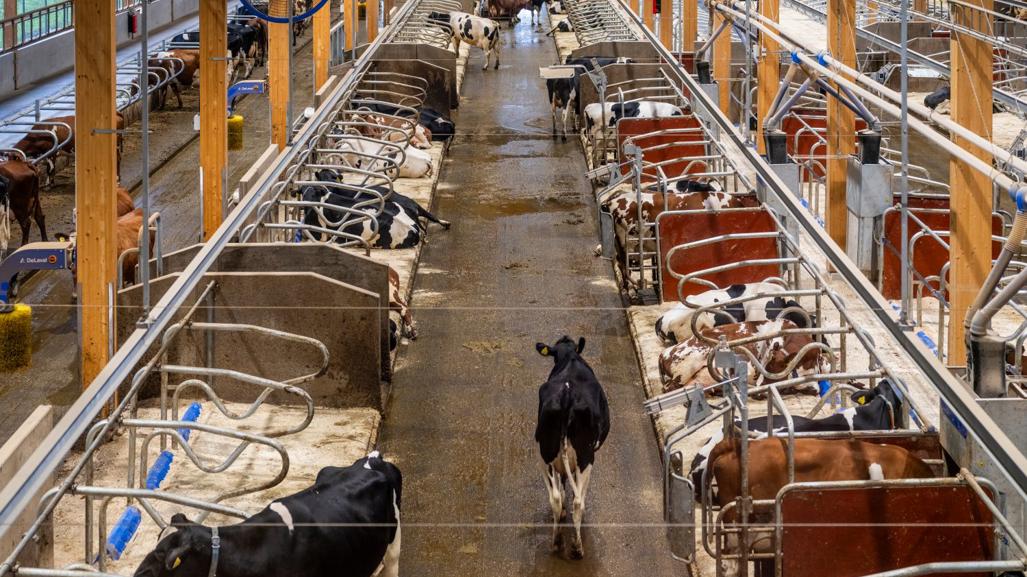
Rest easy: Six principles that make all the difference
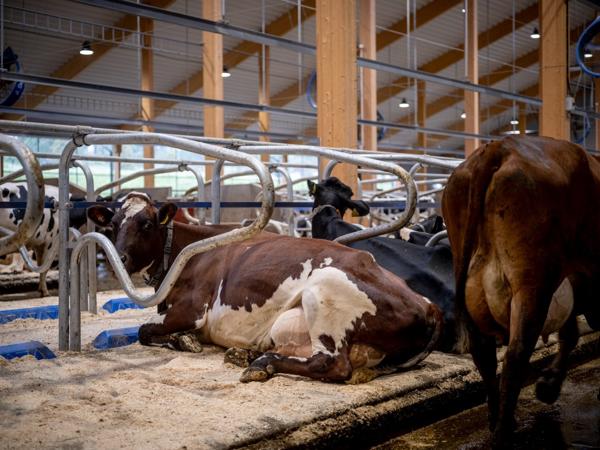
Who doesn't appreciate a good sleep?
We've all spent a night in a lumpy bed and felt the consequences the next day: stiff, tired, sore and more than a little annoyed. It's no different for cows.
That's why every aspect of the resting areas in our VMS Barn has been designed around six key principles that support cow comfort. From cubicle dimensions and cow positioning to natural movement and mattress selection, every detail has been carefully considered.
So, what makes the perfect bed for a cow? Let's take a closer look, below.
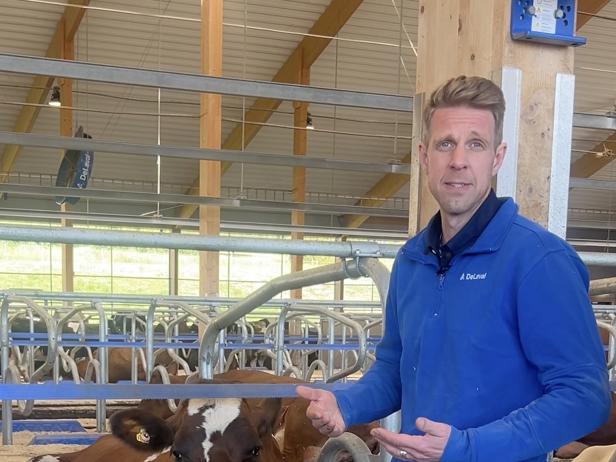
Step inside the VMS Barn
In this video, William Eriksson, Market Area Development Manager at DeLaval, takes a walk through our VMS Barn and explores the resting areas from the cows' perspective. You'll hear how decisions around cubicle size, bedding, cow movement and other small details help cows settle down, rest, and ruminate.
Principle 1
Comfort comes first
Think teenagers sleep a lot? Dairy cows are in a league of their own.
A healthy dairy cow should spend around 12–14 hours a day lying down. During this time, she rests, ruminates and recovers. Increased blood flow to the udder also helps support milk production.
It's udderly important (sorry, terrible pun).
When designing the resting areas, our guiding principle was simple: cow comfort comes first.
The five principles that follow explain how we put that thinking into practice.
Because when cows have a resting area that supports their needs, they are more likely to lie down, ruminate and express their natural behaviours. And that's good for both cow welfare and milk production.

"It looks quite comfortable, doesn't it? It's easy to see why the cows choose to lie down here."
William Eriksson, Market Area Development Manager
Principle 2
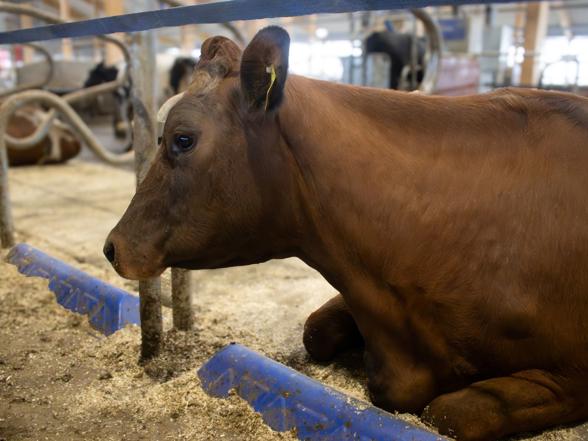
One cubicle per cow
Would you want to share a bed with your colleague? Probably not... and neither would these cows.
That's why every cow has her own cubicle.
Providing enough cubicles reduces competition, allows cows to lie down when they choose, and helps create a calmer barn.
But having enough cubicles is only part of the equation. They also need to be designed to fit the cow, providing the space and comfort she needs to rest properly.
Did you know?
Today's dairy cows are larger than they were 20 years ago, but in many barns, cubicle dimensions haven't kept pace.
It's no surprise, then, that one of the most common issues in dairy barns is cubicles that don't provide enough space for the cows using them. If most cows remain standing rather than lying down when given the opportunity to rest, it may be a sign that the resting area is not meeting their needs.
Because lying time is so important for rumination, digestion and overall wellbeing, cows should be able to rest comfortably whenever they choose. Designing cubicles that fit the cow is one of the most important ways to support that.
Principle 3
Design cubicles to fit the cow
The dimensions of a cubicle should always match the size of the cows using it.
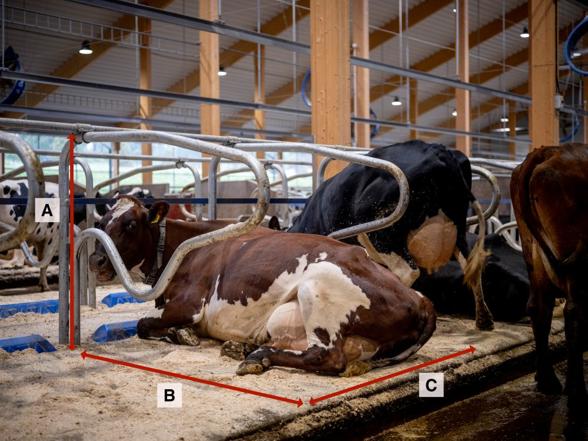
Our cubicles have been designed for our herd of Swedish Red and Holstein cows, which are similar in size. While the exact dimensions will vary depending on the animals, getting these three measurements right is essential on every farm: cubicle width, resting length and divider height.
Measurements at Hamra Farm
A. Divider height: Our dividers are 130 cm high, giving cows the space they need to move comfortably. The position of the neck rail also helps guide cows into the correct position while supporting natural lying and rising movements.
B. Resting length: For us, a length of 180 cm provides the right balance between comfort and positioning. The aim is to encourage cows to lie straight within the cubicle rather than diagonally across it, helping them make full use of the resting area. Correct positioning also makes it more likely that manure ends up in the alley rather than on the resting surface, helping keep the cubicle cleaner and supporting better udder hygiene.
C. Cubicle width: One important measurement is the distance between the cubicle dividers. We designed our cubicles with a width of 125 cm, giving cows enough room to enter, lie down and stand up comfortably.
Principle 4
Support correct resting positions
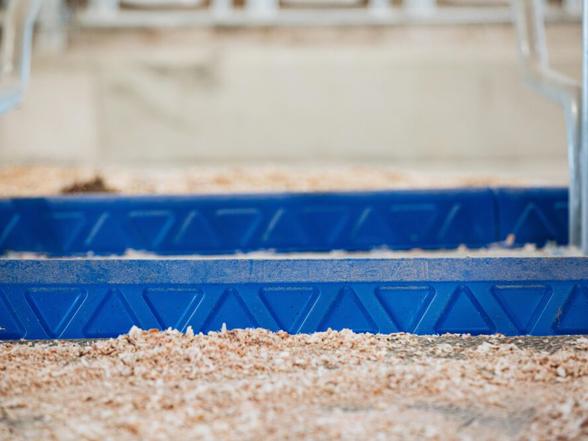
The brisket board sits at the front of the cubicle, but it plays an important role in how cows use the space. By encouraging cows to lie in the right position, it helps create a comfortable resting area while making it easier to keep the cubicle clean.
We installed a soft, rounded brisket board that guides positioning without restricting natural movement. It also allows cows to stretch a front leg forward while resting – something cows naturally like to do when they're comfortable. It's a small detail, but one that can make a big difference to cow comfort.
Principle 5
Allow natural rising movement
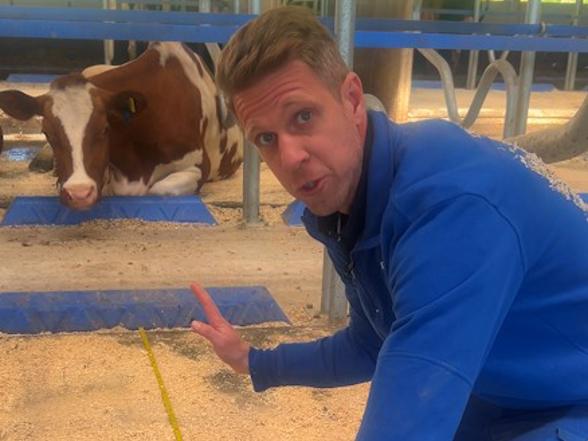
Think about how a cow stands up. Before she rises, she stretches her head and neck forward in a natural movement known as a lunge.
Without enough space in front of the cubicle, this movement becomes restricted, making it harder for cows to stand up comfortably. That's why lunge space/designing for natural movement is such an important part of cubicle design.
In the VMS Barn, we made sure there is sufficient open space at the front of each cubicle, allowing cows to lie down and rise naturally and without obstruction. In situations where a boundary is needed, for example to guide cow traffic or accommodate groups with cows of different sizes, a flexible band can be a useful alternative to a solid wall. It helps guide cows while still allowing the natural lunge movement needed to stand up comfortably.
It might seem like a small detail, but giving cows the space they need to move naturally can make a big difference to comfort and overall cow welfare.
Principle 6
Choose the right mattress
Not all cow beds are created equal. The wrong mattress can affect how comfortably cows rest.
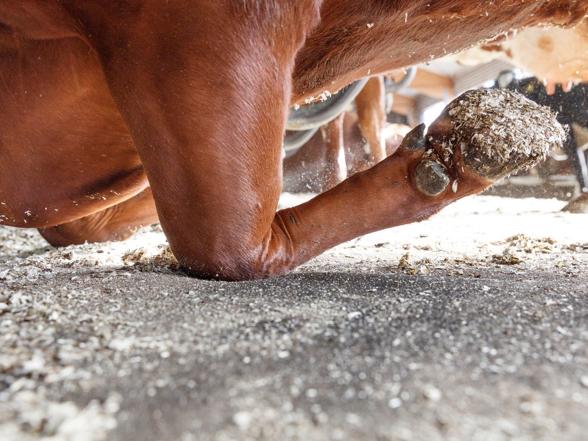
Many people assume mattress thickness is the key to comfort, but that's only part of the story. What really matters is how the mattress performs under the cow's weight. True comfort comes from controlled compression, where the mattress provides a soft resting surface while still offering support.
The VMS Barn uses the DeLaval M45R mattress because it combines flexibility and resilience, creating a soft and supportive resting surface while retaining its shape under daily use.
Long-term performance is important because a mattress needs to remain comfortable not just today, but for years to come. Over its lifetime, thousands of cows will lie down and stand up on it, creating countless loading cycles. Mattresses that lose their shape can develop grooves and low spots that collect manure, urine and milk, making the resting surface harder to keep clean. This can increase hygiene challenges and contribute to a higher risk of udder health issues.
A good cow mattress should:
- Compress comfortably under pressure
- Provide good grip when lying down and standing up
- Return to its original shape after use
- Maintain its comfort and performance over time
- Stay flat, supportive and comfortable through years of daily use, helping provide cows with a clean, hygienic and comfortable place to rest
- Remember: look beyond thickness alone.
Learn more
And here's another video that takes a deeper look at how we designed the cubicles in the VMS Barn. William Eriksson explains the key design decisions behind the resting areas and how details such as cubicle dimensions, mattresses, bedding, and cow movement work together to create a comfortable place for cows to rest and ruminate.
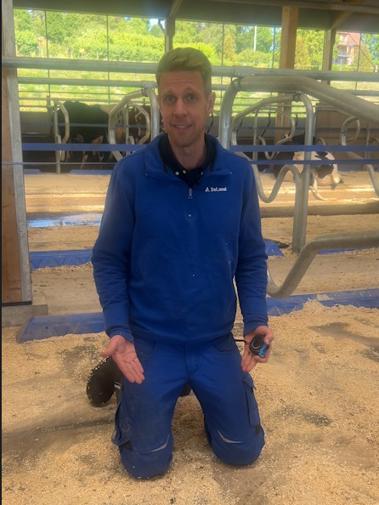
The simple knee test
At DeLaval, we often use a practical way to assess mattress comfort: 'the knee test.'
The idea is simple.
Kneel down on the mattress and let your weight drop naturally onto your knees. If it feels comfortable and cushioned without causing discomfort, it's generally a good indication that it will provide comfort for the cow as well.
It's not a scientific measurement, but it offers a quick and practical way to assess comfort firsthand.
And in the VMS Barn?
The mattress passed the test.
A cow's bed wish list
In the end, a cow's bed wish list isn't complicated. It includes:
• A cubicle of her own
• Enough space to lie down and stand up comfortably
• Dimensions that fit today's larger dairy cows
• Support for natural resting positions
• Room for natural rising and lying movements
• A soft, supportive mattress that stays comfortable over time
Together, they help create an environment where cows can rest, ruminate and express their natural behaviours. And when your cows have a comfortable place to rest, you can rest easy too.